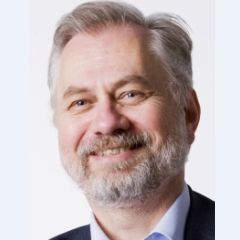
Dr. Paul O. Olson works at the intersection of governance, strategy, and tacit knowledge management, helping organizations surface and use the critical knowledge that rarely appears in reports, dashboards, or formal processes. His work focuses on how boards, senior management teams, and complex organizations make decisions under uncertainty — especially where judgement, experience, and organizational memory matter more than formal structures alone.
Recognized as a specialist in governance and tacit knowledge management, Paul advises organizations on how to strengthen strategic alignment, decision quality, and institutional learning across leadership systems. His approach combines governance design, organizational insight, and practical management research to help organizations capture the value of expertise that is often invisible, fragmented, or difficult to transfer. He is particularly known for translating abstract concepts such as tacit knowledge, leadership judgement, and board dynamics into practical frameworks that organizations can apply in real-world governance and transformation work.
His combination of an MBA and a doctorate in psychology and psychotherapy provides an unusually rare foundation for understanding corporate dynamics — particularly the human, relational, and behavioural factors that shape executive decision-making, leadership interaction, and organizational governance beneath the formal structures.
Paul’s work is especially relevant for boards, executive teams, public institutions, professional service firms, and knowledge-intensive organizations navigating complexity, succession risk, strategic change, or cross-functional coordination challenges. His perspective emphasizes that sustainable organizational performance depends not only on information systems and formal governance structures, but also on how experience, judgement, trust, and shared understanding are developed and transferred within leadership communities.
Through research, advisory work, and strategic facilitation, Paul helps organizations build stronger governance capability while preserving and mobilizing the institutional knowledge that often determines long-term success.